
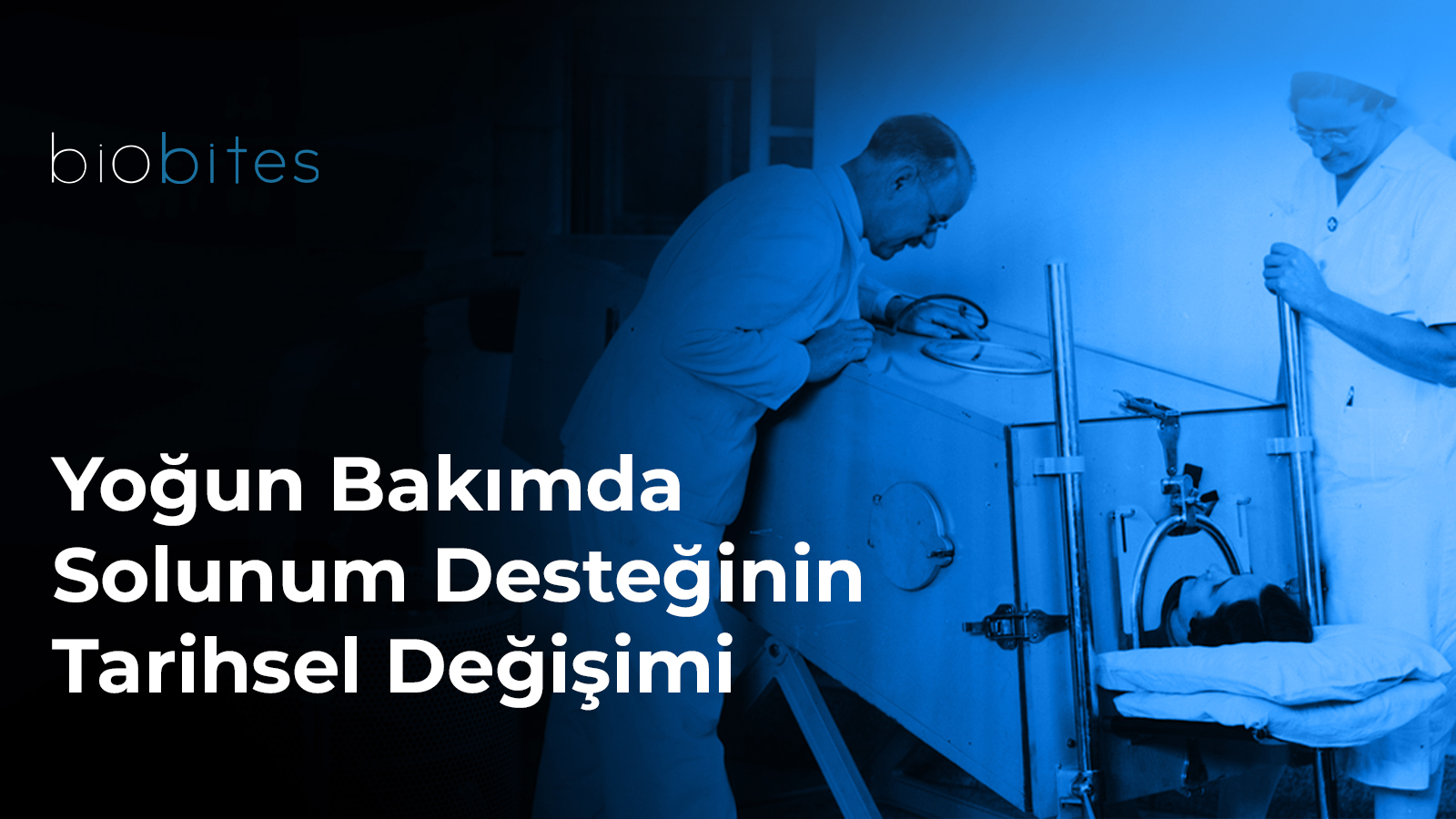
Respiratory support in intensive carehas evolved significantly over time, from simple manual methods to advanced, intelligent devices. Initially provided by negative-pressure devices such as the “iron lung” in the early 20th century, respiratory support reached a turning point with the use of positive-pressure ventilation during the 1952 polio epidemic in Kopenhag. This development laid the foundation for modern intensive care.
From the 1960s onward, volume-controlled and pressure-controlled mechanical ventilatorswere developed. In the 1980s, microprocessor-based devices made ventilation more controlled and safer. In the 2000s, lung-protective strategies were adopted, including low tidal volumeand appropriate PEEP.
Over time, non-invasive ventilation (BiPAP, CPAP) and high-flow nasal oxygen systems also became widespread. The COVID-19 pandemic once again demonstrated how vital ventilators are. Today, respiratory support is provided by advanced devices with personalized settings, artificial intelligence support, and protective strategies.
Respiratory support in intensive care encompasses invasive and non-invasive methods used to maintain oxygenation and carbon dioxide elimination in patients with respiratory failure. This support is used when patients cannot breathe adequately on their own or when their work of breathing needs to be reduced. The aim is to optimize gas exchange, protect the lungs, and keep the patient alive until the underlying condition improves.
Types of Respiratory Support
Respiratory support is broadly divided into two main categories:
Types of Mechanical Ventilation
1. Non-invasive respiratory support:
Delivered through a mask or nasal cannula, without requiring intubation. High-flow nasal cannula therapy or a non-invasive mechanical ventilation device is used.
2. Invasive respiratory support:
Delivered through an endotracheal tube placed in the trachea. Mechanical ventilation or extracorporeal membrane oxygenation is used.
When Is Mechanical Ventilation Support Used?
Respiratory support is required in the following situations:
- Hypoxemic respiratory failure (PaO₂ < 60 mmHg): Conditions such as acute respiratory distress syndrome (ARDS), pneumonia, and COVID-19.
- Hypercapnic respiratory failure (PaCO₂ > 45 mmHg): COPD exacerbations and neuromuscular diseases.
- Cardiogenic pulmonary edema
- Postoperative respiratory depression
- Trauma, sepsis, metabolic conditions
What Is a Mechanical Ventilator?
A mechanical ventilator respiratory failure is a medical device that delivers air to the lungs under positive pressure to support or fully take over breathing in patients with respiratory failure. Intensive care units, operating rooms, and emergency departments use it to temporarily maintain respiratory function in critically ill patients.
Mechanical ventilationmimics breathing to meet the body's oxygen needs, regulate carbon dioxide elimination, and rest the respiratory muscles.
Main Goals of Mechanical Ventilation
- Correct hypoxemia (increase oxygen levels)
- Reduce hypercapnia (remove carbon dioxide)
- Reduce the work of breathing
- Prevent complications through lung-protective ventilation strategies
- Support spontaneous breathing to prepare the patient for weaning from the ventilator
How Is a Mechanical Ventilator Used?
1. Preparation and Patient Selection
Mechanical ventilation is usually initiated in the following situations:
- Acute respiratory failure
- ARDS (Acute Respiratory Distress Syndrome)
- COPD exacerbation
- General deterioration due to conditions such as sepsis, trauma, or brain injury
- Postoperative respiratory depression
The patient is intubated, and an endotracheal tube is placed in the trachea. This tube is connected to the mechanical ventilator.
2. Mode Selection
A mechanical ventilator can be set to different operating modes:
- Controlled Mode (AC – Assist/Control): The device initiates and controls every breath. The patient does not contribute.
- Assisted Mode (SIMV – Synchronized Intermittent Mandatory Ventilation): The patient may breathe spontaneously at times; the device provides support when needed.
- Pressure Support Ventilation (PSV): The device provides pressure support for each inspiratory effort by the patient.
- CPAP: Constant positive pressure is provided to a spontaneously breathing patient.
3. Monitoring
The following parameters are closely monitored during ventilation:
- SpO₂ (Oxygen saturation)
- End-tidal CO₂ (etCO₂)
- Tidal volume and minute ventilation
- Respiratory mechanics (compliance, resistance)
- Alarm systems (high pressure, low volume, disconnection, etc.)
Monitoring and Assessment During Ventilation
Ventilation effectiveness and patient status are monitored through:
- Arterial blood gas (ABG): PaO₂, PaCO₂, pH
- Pulse oximeter (SpO₂)
- End-tidal CO₂ (etCO₂)
- Respiratory mechanics (compliance, resistance, Pplat)
- Alarm systems: Report conditions such as pressure, volume, and disconnection
Complications and Points to Consider
- Ventilator-induced lung injury (VILI): Low tidal volume and appropriate PEEP should be used to protect against volutrauma, barotrauma, and atelectasis.
- Ventilator-associated pneumonia (VAP): Measures such as oral care and elevating the head by 30–45° are important.
- Hemodynamic effects: High positive pressure may reduce venous return.
- Diaphragm atrophy: Prolonged use of full-support modes may weaken the respiratory muscles.
Weaning from the Ventilator
Once the patient has adequate respiratory strength and gas exchange, ventilator support is gradually reduced. The weaning process involves:
- Spontaneous breathing trials (SBT)
- Reducing pressure support
- Reducing FiO₂ and PEEP.
Frequently Asked Questions
- Are mechanical ventilation and oxygen therapy the same thing?
No. Oxygen therapy is delivered through a simple mask or nasal cannula. Mechanical ventilation uses pressure to assist breathing in patients with impaired lung function and provides a more advanced level of support.
- Does a mechanical ventilator always require intubation?
No. Non-invasive mechanical ventilation (e.g., BiPAP, CPAP) can be delivered through a mask. However, invasive mechanical ventilation generally requires intubation.
- Is dependence on a mechanical ventilator permanent?
No. Support is temporary. Once the patient's respiratory muscles strengthen and gas exchange returns to normal, weaning from the ventilator begins.
- Is a mechanical ventilator painful?
No, mechanical ventilation itself is not painful. However, living with an endotracheal tube and the device may be uncomfortable. Patients are therefore usually given sedation and sometimes muscle relaxants.
References
- https://www.wsj.com/articles/after-tragedy-an-entrepreneurs-triumph-1b26bd56?utm_
- https://ject.edpsciences.org/articles/ject/pdf/forth/ject250018.pdf?utm_
- https://www.atsjournals.org/doi/full/10.1164/rccm.202211-2174CP?utm_
- https://www.ncbi.nlm.nih.gov/books/NBK578188/?utm_
- https://jamanetwork.com/journals/jama/fullarticle/2769872?utm_