
The thyroid gland is an important part of the endocrine system and plays a role in producing certain hormones. The parathyroid glands are the four small glands located around the thyroid. These glands, which are involved in energy metabolism, may undergo tissue or functional changes associated with various diseases.
Surgery may be used to address these conditions. Like any surgical procedure, thyroid surgery carries risks. Hoarseness after thyroid surgery is a particularly common complication.
Advances in medical technology have led to the development of intraoperative neuromonitoring to address this complication. This technology can prevent damage to the vocal cords during thyroid and parathyroid surgery.
What Is Thyroid Surgery?
Thyroid surgery, also known as thyroidectomy, is a treatment that involves surgically removing all or part of the thyroid gland. Various techniques may be used during the operation, which is performed under local anesthesia.
In conventional thyroidectomy, tissue is removed through an incision in the middle of the neck. In transoral thyroidectomy, the incision is made inside the mouth, while endoscopic thyroidectomy uses small incisions that allow endoscopic instruments to reach the thyroid gland. Endoscopic thyroidectomy is currently the most commonly used method.
When Is Thyroid Surgery Needed?
Thyroid surgery may be performed to treat various thyroid conditions. It is primarily used in people with thyroid cancer, allowing tumors and cancerous tissue to be removed from the body. In addition to cancer treatment, it may also be used to treat goiter, which is characterized by noncancerous enlargement of the thyroid gland.
As an enlarged thyroid may make breathing and swallowing difficult, surgery can relieve these symptoms. Surgery may also be necessary if a suspicious nodule is found or the thyroid gland is overactive (hyperthyroidism).
What Is Parathyroid Surgery?
Parathyroid surgery is generally performed to remove a tumor that has developed in the parathyroid glands. These 4 small, rice-grain-sized structures may also need to be removed in cases of primary or secondary hyperparathyroidism.
In these two conditions, excessive production of thyroid hormone may cause various health problems. Surgery aims to prevent complications arising from the parathyroid gland.
What Are the Side Effects of Thyroid Surgery?
Like any surgical procedure, thyroid and parathyroid surgery carry certain risks. These include:
- Swelling beneath the skin of the neck,
- Infection,
- A decrease or increase in calcium levels
- Loss of voice or hoarseness due to damage to the vocal cords.
Why Is Intraoperative Neuromonitoring Used in Thyroid Surgery?
The risks of thyroid surgery include permanent damage to the vocal cords. Advances in neuromonitoring technology can prevent this damage.
During thyroid and parathyroid surgery, the recurrent laryngeal and superior laryngeal nerves, which contribute to voice production, are located close to the thyroid glands. Intraoperative neuromonitoring can identify the location of these nerves. Correct use of the technique can prevent loss of voice.
Which Risks Does Intraoperative Neuromonitoring Reduce?
Intraoperative neuromonitoring makes it easier to identify the laryngeal nerves during thyroid and parathyroid surgery. It also enables assessment of their anatomical and functional integrity. This can prevent surgical nerve damage affecting the vocal cords and help preserve the patient's voice.
How Is an Intraoperative Neuromonitor Used in Thyroid Surgery?
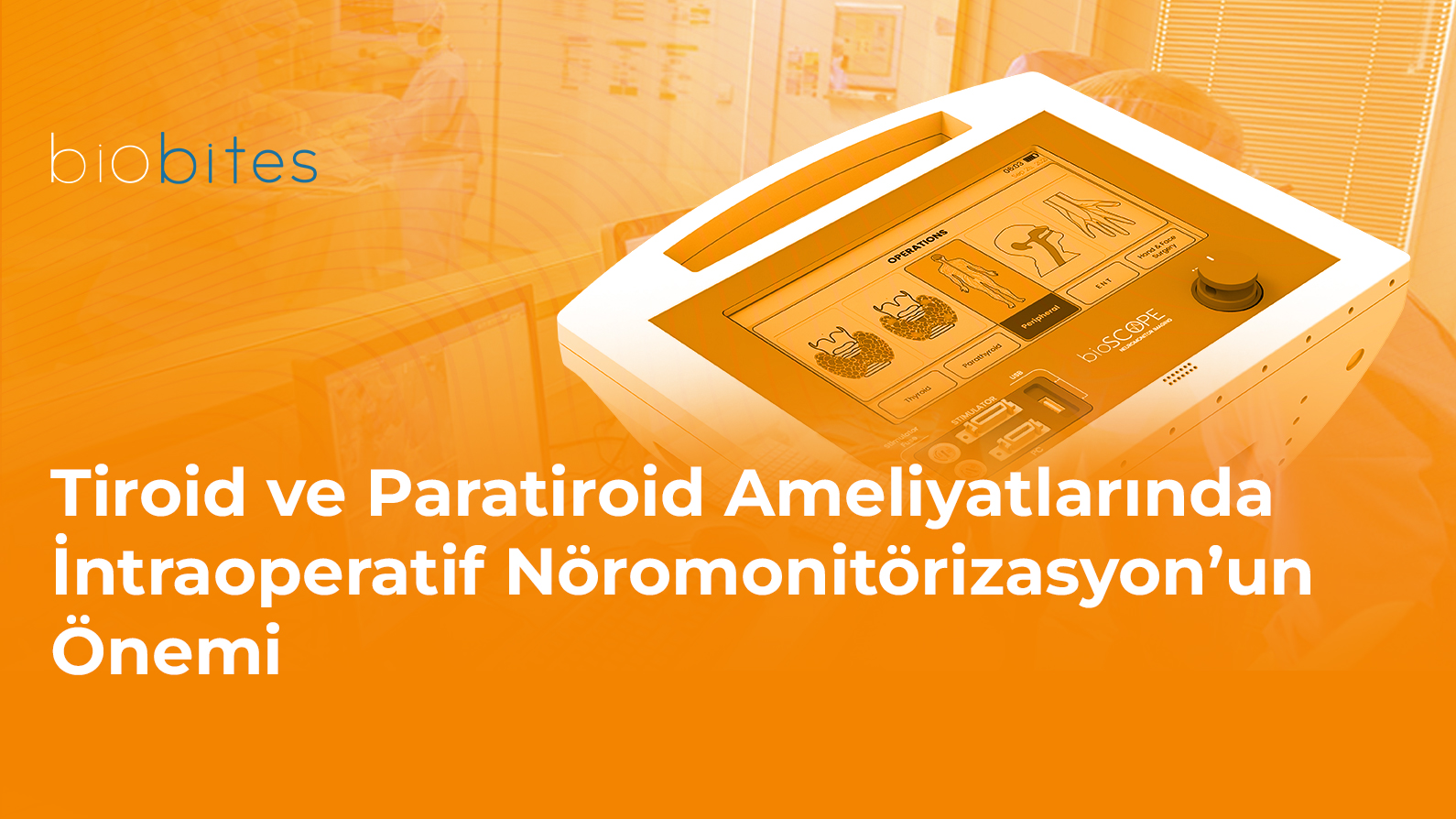
Physicians must receive training to use an intraoperative neuromonitor during thyroid surgery. Once device operation has been learned, neuromonitoring is now usually incorporated into surgery using an endotracheal tube with integrated surface electrodes.
During the operation, the patient is first intubated and the tube is positioned between the vocal cords. At the start of surgery, the vocal cords are stimulated with a current of 0,2- 0,5 mA, causing the vocal muscles to contract. Surface electrodes detect this contraction, generate an electromyographic waveform, and transmit it to the monitor. By following these waveforms, the physician can perform surgery without damaging the nerves.
Frequently Asked Questions
What are the complications after thyroid surgery?
Possible complications after thyroid surgery include infection, bleeding, reduced parathyroid hormone levels, and nerve damage affecting the vocal cords.
Is nerve monitoring used in thyroid and parathyroid surgery?
Nerve monitoring has recently become a widely used method in thyroid and parathyroid surgery. It can prevent damage to the nerves involved in voice production.
Can voice damage that occurs during thyroid surgery be treated?
In some cases, voice damage that occurs during surgery may resolve on its own during recovery. However, if nerve damage affecting the vocal cords occurs during the procedure, the resulting impairment may be permanent.
Intraoperative neuromonitoring is a technology that can be easily incorporated into surgery. It can improve surgical outcomes by preventing damage to the vocal cords.
References
https://my.clevelandclinic.org/health/body/23188-thyroid
https://www.mayoclinic.org/tests-procedures/thyroidectomy/about/pac-20385195
https://www.mayoclinic.org/tests-procedures/parathyroidectomy/about/pac-20536704
https://www.sciencedirect.com/science/article/abs/pii/S2173573518300516
https://www.mdpi.com/2227-9059/12/3/675#:~:text=7.,after%20the%20completed%20surgical%20procedure.